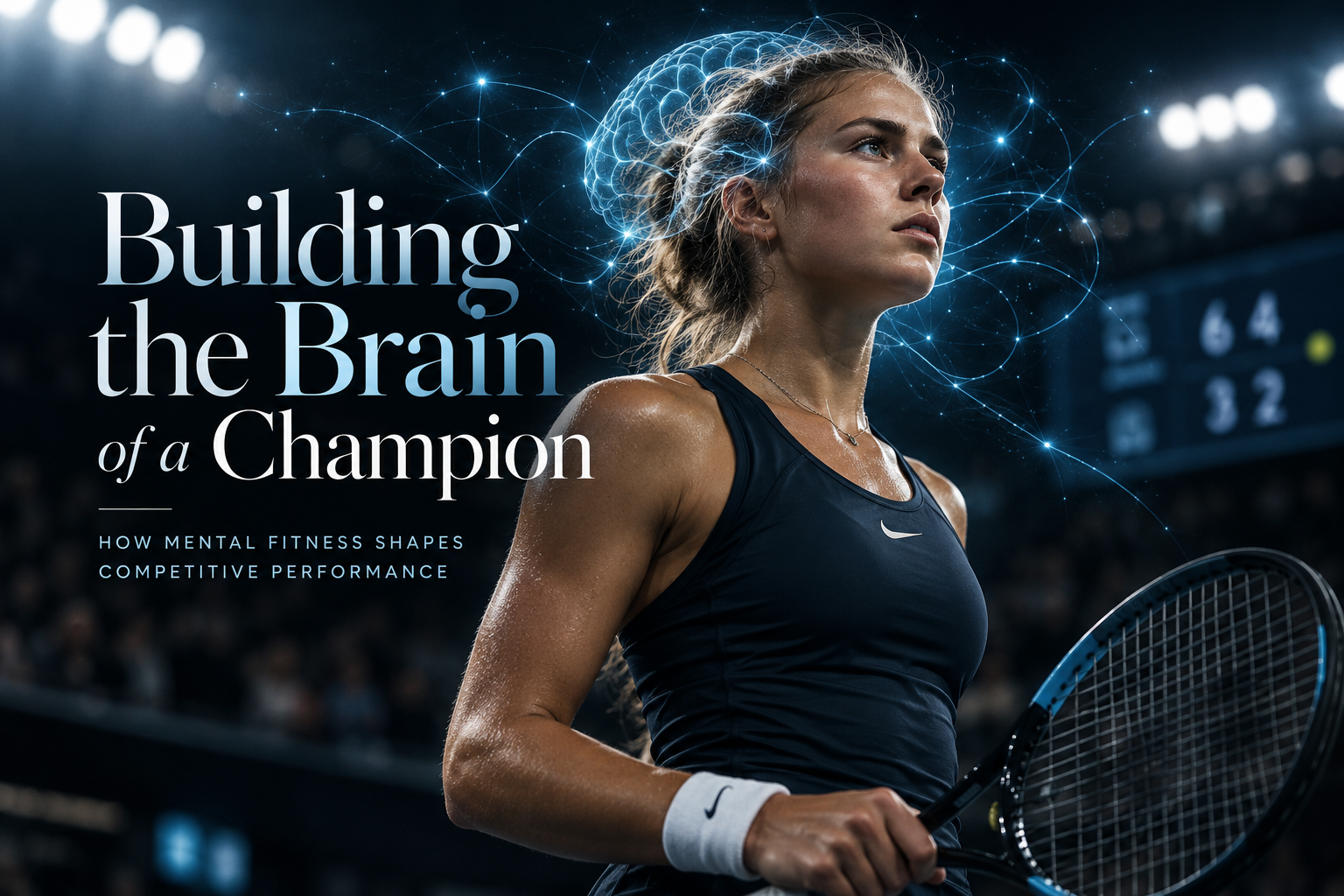
Championship performance is not only about what an athlete can do when everything is going right. It is also about the mental system built for the moments when things go wrong. In the final article of the original eight-part Mental Fitness Lab™ series, we bring together neuroplasticity, repetition, active learning, attention, confidence, pressure response, and habit formation to explore how these systems interact. Building the Brain of a Champion examines how athletes can deliberately develop a more adaptable, resilient, and consistent approach to competition—without pretending that mental training eliminates uncertainty, nerves, or failure.

Most athletes understand that repetition makes physical skills more automatic, but the brain can also automate mental and emotional responses. How you react after a mistake, where your attention goes under pressure, and how quickly you recover can all become familiar behavioral patterns. In Lab 7 of The Mental Fitness Lab™, we explore the neuroscience of habit formation and explain how deliberate repetition, consistent cues, structured reflection, and practice can transform conscious mental training into increasingly automatic competitive responses. Discover why the goal of Mental Fitness isn't to think more under pressure, it's to train your brain to respond more effectively.

Pressure is often treated as something athletes need to eliminate, but elevated heart rate, butterflies, heightened awareness, and physical activation can all be normal responses to an important competitive moment. The more important question is what happens next. In Lab 6 of The Mental Fitness Lab™, we explore how repeated interpretations and behaviors can create familiar pressure-response patterns, and how athletes can begin training a different one through awareness, reframing, attentional control, breathing, committed action, and deliberate practice.

Confidence is often treated as a feeling athletes either possess or lose, but the brain may be doing something more sophisticated. It is constantly using experience, memory, attention, and action to predict what you are capable of doing next. In Lab 5 of The Mental Fitness Lab™, we explore how confidence is built from credible evidence, why mastery experiences matter, how attention and memory can distort the confidence story, and why action can sometimes come before belief. The central idea is simple: confidence is not certainty about winning, it is a learned expectation that you can respond effectively when competition becomes difficult.
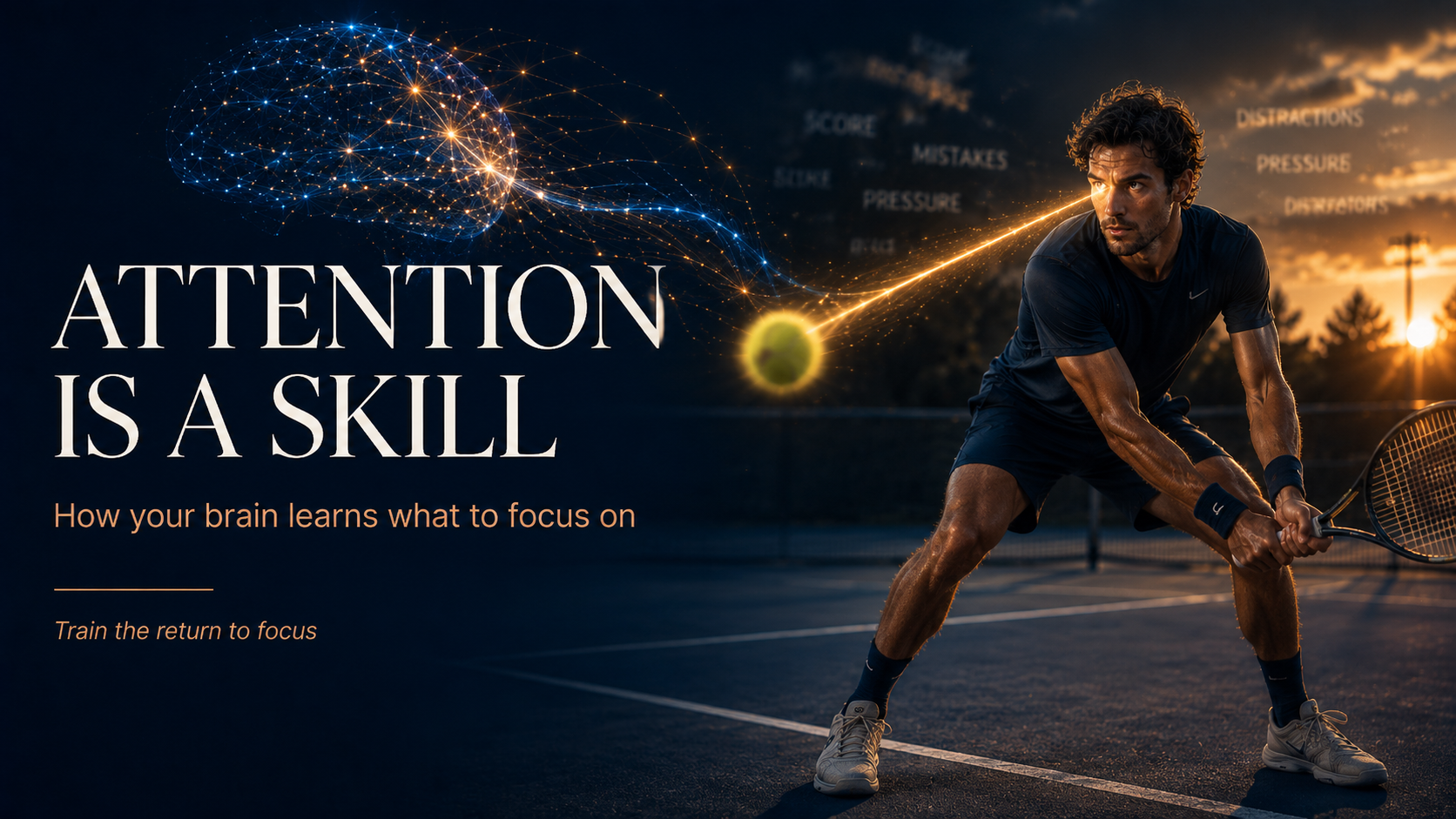
Most athletes think focus is something they either have or lose, but attention works differently. During competition, the brain continually decides what deserves priority, and under pressure, that spotlight can shift from the ball and target toward score, consequences, mechanics, mistakes, and fear. In Lab 4 of The Mental Fitness Lab™, we explore the neuroscience of selective attention, why pressure changes what athletes notice, and why the most important attentional skill may not be maintaining perfect concentration but learning how to return when the mind wanders. Through simple tools such as **NOTICE → RELEASE → RETURN** and **BALL → BREATH → TARGET**, players can begin training attention as intentionally as they train strokes, movement, and conditioning.

The Generation Effect explains why athletes learn more deeply from insights they actively create than from information they simply read, hear, or watch. While coaching, books, videos, and podcasts can provide valuable knowledge, lasting change occurs when players connect that information to their own experiences, identify patterns, and generate their own responses. Structured writing supports this process by slowing thought down, clarifying meaning, and turning vague reactions into practical lessons for future performance. In Lab 3 of The Mental Fitness Lab™, we explore why Writing Trails™ are more than journaling, they are a form of active learning and intentional mental conditioning designed to strengthen confidence, focus, resilience, self-awareness, and performance under pressure.

Most athletes believe practice makes perfect, but neuroscience tells us something more important: practice strengthens whatever we repeatedly do. That includes not only strokes and movement, but also confidence, frustration, composure, fear, resilience, and recovery. In the latest lesson from The Mental Fitness Lab™, we explore Hebb’s Law—often summarized as “neurons that fire together wire together”—and explain why pressure tends to reveal the mental responses we have practiced most deeply. Read the full article to discover how every repetition is helping build the competitor you bring to the court.

This article explores how neuroplasticity shapes athletic performance by showing that every repeated thought, emotional response, and behavior helps train the brain for future competition. Using tennis as the central example, it explains how players develop both visible skills, such as strokes, movement, and tactics, and invisible skills, including confidence, focus, resilience, emotional regulation, and competitive identity. The article distinguishes accidental neuroplasticity, in which mental patterns form without intention, from intentional neuroplasticity, in which athletes deliberately strengthen more effective responses. It also explains how Lifewrite’s structured Writing Trails™ use reflection and the generation effect to help players turn experience into insight and insight into action. The central message is that Mental Fitness is not positive thinking or motivation; it is the intentional development of the mental and neural patterns that make better performance more accessible when pressure is highest.
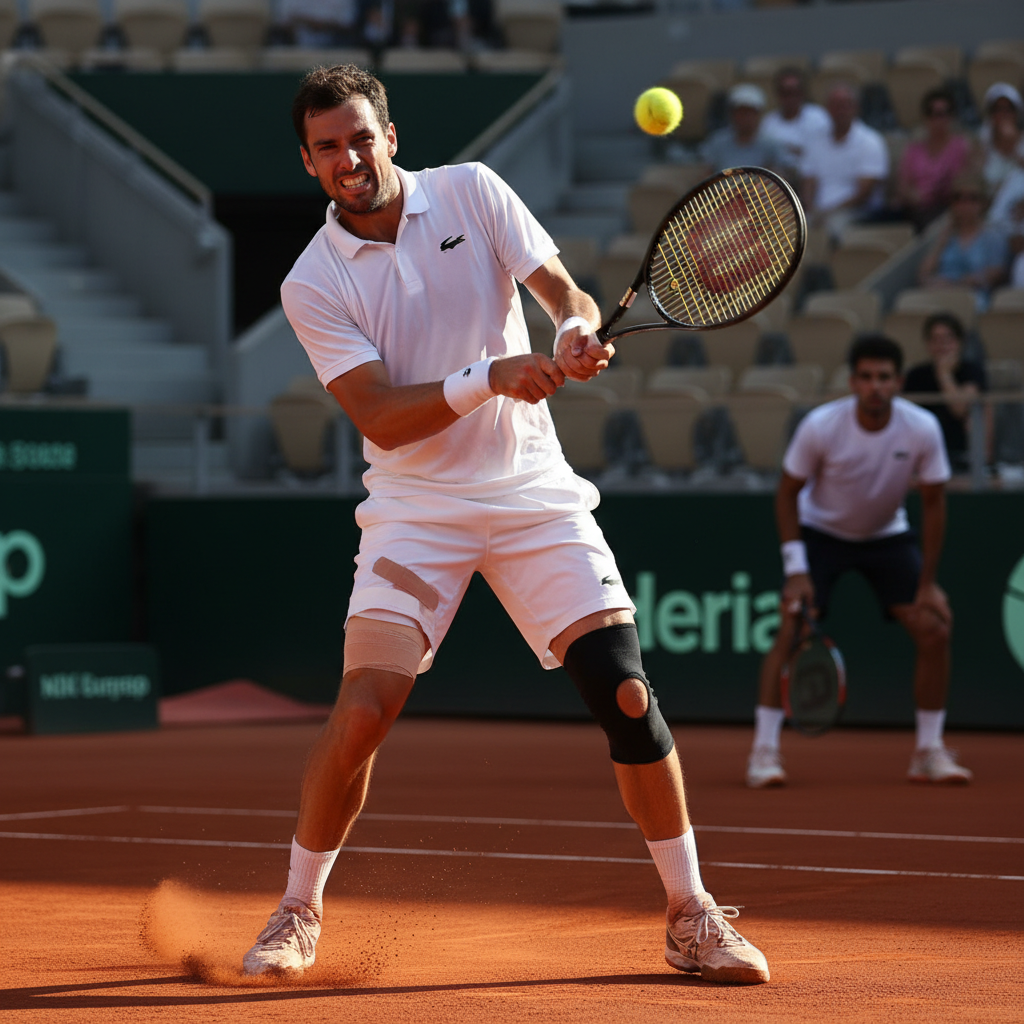
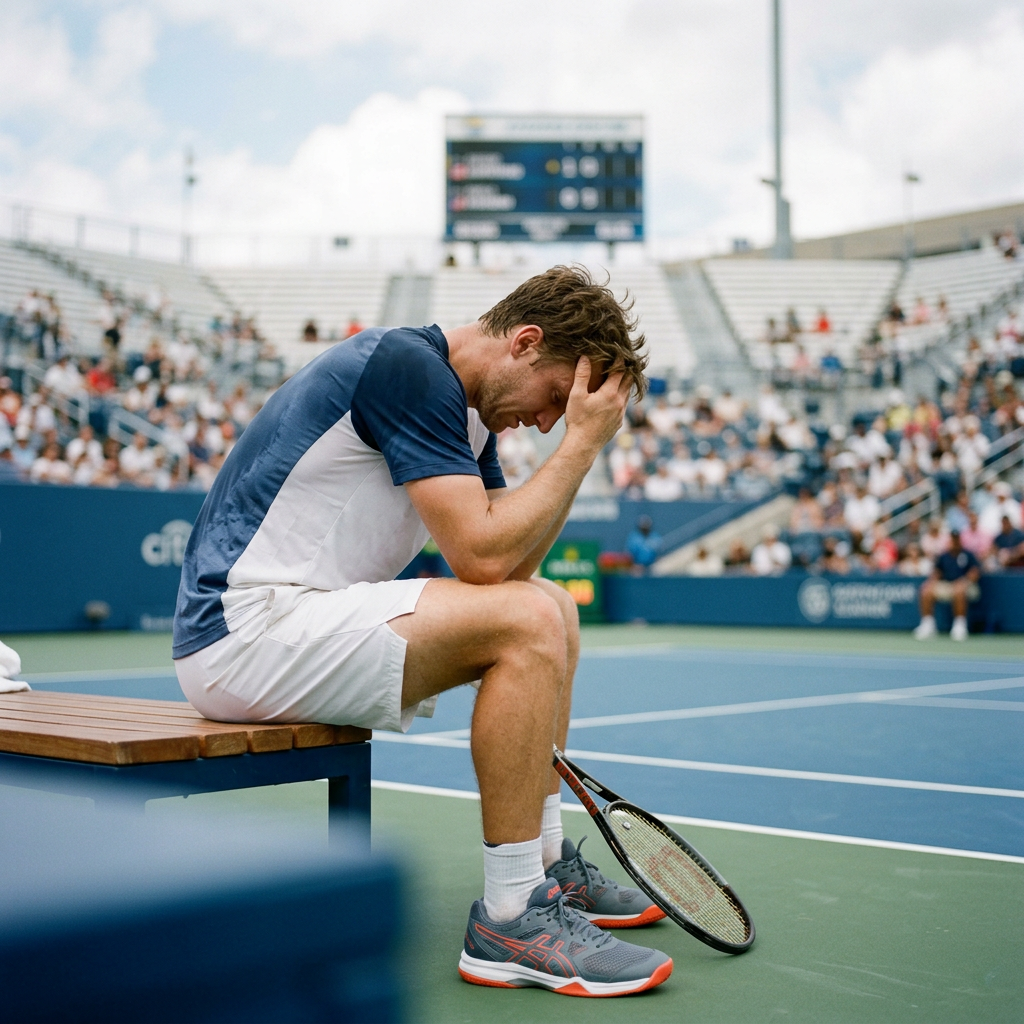
It may begin with a slight twinge in the shoulder during a serve, a sore knee after a long tournament weekend, persistent pain in the lower back, or an ankle that never quite regains its stability after a bad step. Sometimes the injury arrives suddenly. More often, it creeps into a player's life gradually until one day they realize they can no longer swing as freely, move as confidently, or trust their body as completely as they once did. The physical injury is only the beginning. What follows is often a much quieter battle, one that unfolds inside the player's mind. For athletes whose identities have been shaped by competition, improvement, and the pursuit of excellence, injury introduces uncertainty unlike anything else in sport. Confidence begins to waver. Decision-making becomes more cautious. The joy of competing is gradually replaced by a constant internal negotiation between what the player wants to do and what their body will allow them to do. It is during these moments that mental fitness becomes more than an advantage. It becomes essential. One of the greatest misconceptions in competitive tennis is that mental training exists primarily to help players perform under pressure when they are healthy. In reality, the need for mental fitness often becomes even greater when physical capacity is temporarily reduced. When your body is operating at eighty or ninety percent, your ability to think clearly, regulate emotions, adapt strategically, and remain confident may determine far more than the quality of your forehand. It may determine whether you continue to grow as a competitor at all.
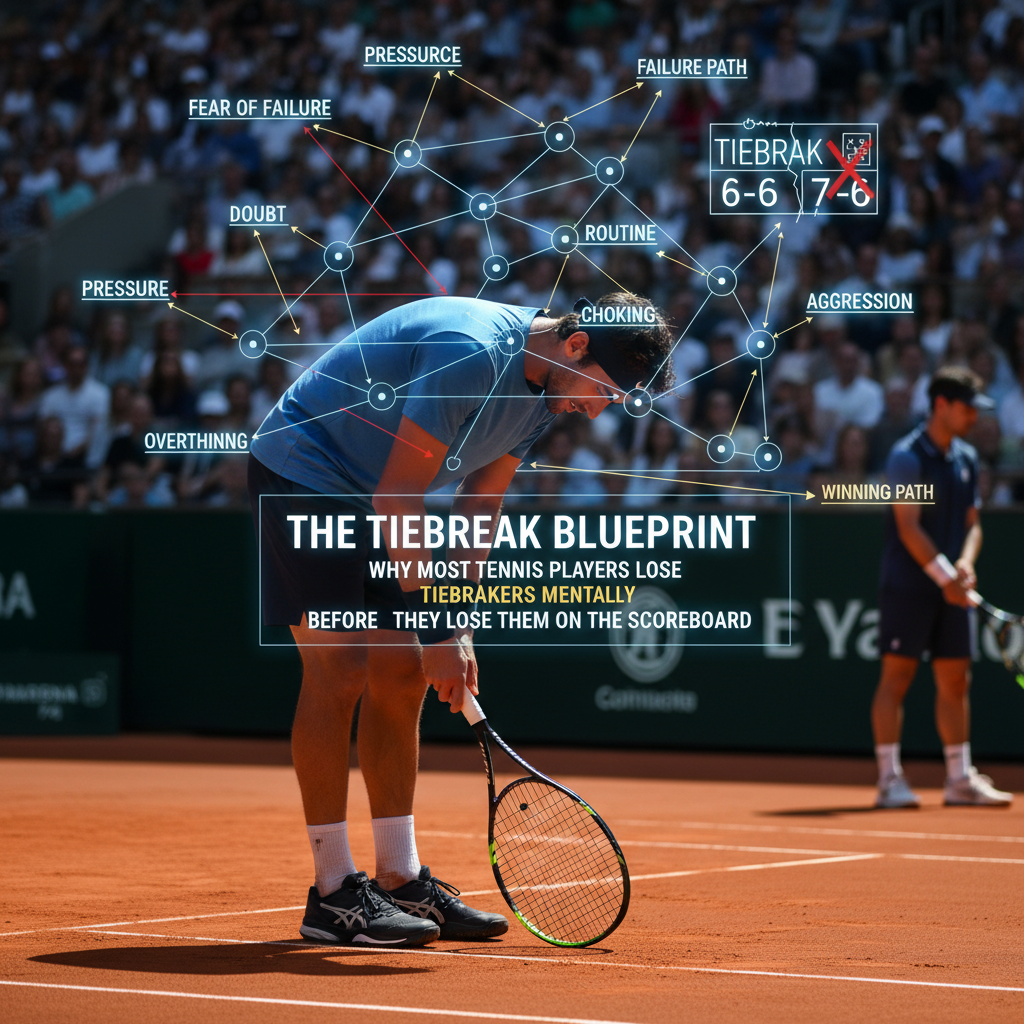
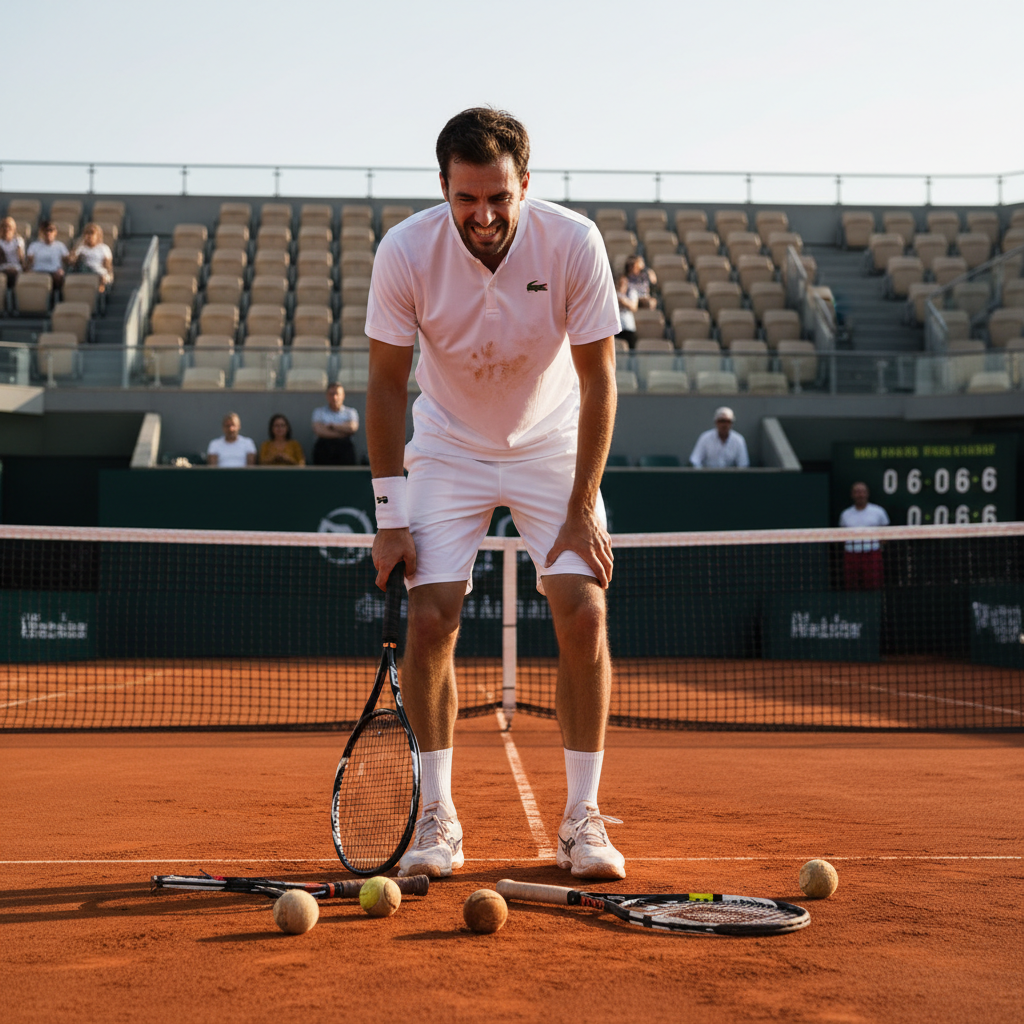
Few moments in tennis reveal the true nature of a competitor more clearly than a tiebreak. For spectators, a tiebreak is exciting because it condenses an entire set into a handful of critical points. Momentum shifts quickly. Every point appears to carry greater significance. The drama is obvious. What is less obvious is what is happening inside the minds of the players involved. Coaches see it all the time. A player who has looked composed and confident for an entire set suddenly becomes tentative. A competitor who has been serving aggressively begins guiding the ball into the box. A player who has been moving freely starts looking hesitant and tight. The strokes may appear the same, but the mindset behind them has changed dramatically. Most players assume they lose tiebreakers because of a few poorly executed shots. They remember the missed forehand at 5-4 or the double fault at 6-5 and conclude that the match turned on those moments. While those mistakes certainly matter, they are often symptoms rather than causes. The truth is that many tiebreakers are lost mentally before they are lost on the scoreboard.
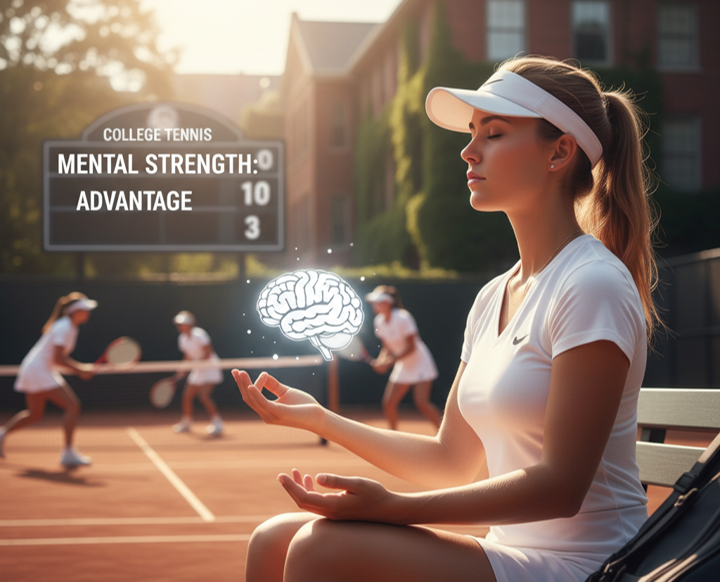
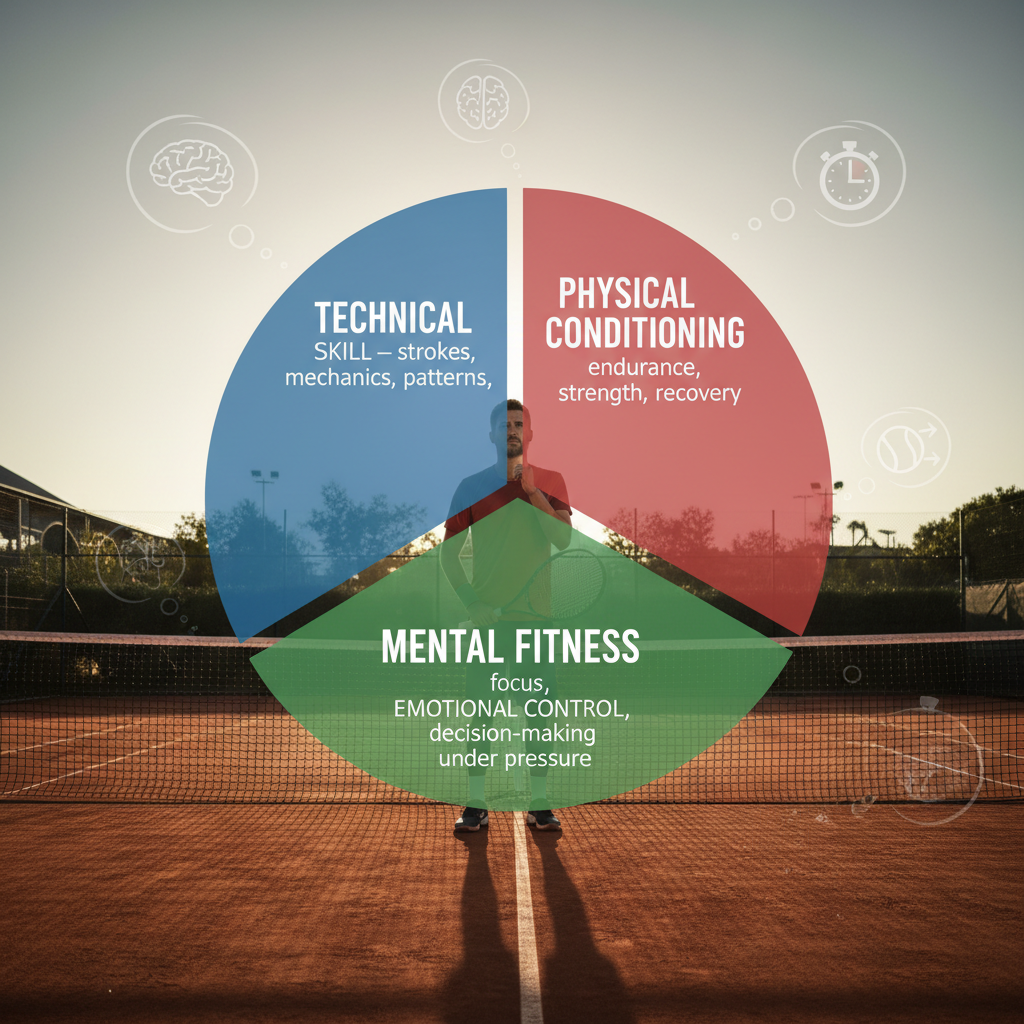
College tennis has solved many of the problems that once limited player development. Today's athletes are stronger than ever. Strength and conditioning programs have become highly sophisticated. Nutrition is no longer viewed as supplemental but as an essential component of performance. Recovery science has evolved into its own discipline. Video analysis, biomechanics, performance analytics, and increasingly powerful technologies have transformed how athletes train and compete. From a purely physical and technical standpoint, the modern college player is remarkably well prepared. And yet, despite all of this progress, many coaches would quietly admit that they are spending more time dealing with confidence issues, emotional inconsistency, performance anxiety, burnout, focus-related challenges, and team culture dynamics than ever before. That presents an interesting question. How can athletes be more physically prepared, more technically advanced, and more informed than any previous generation, yet still struggle so significantly with the mental demands of competition? The answer may lie in a reality that many programs are beginning to recognize but few have fully addressed:
The demands placed on today's athletes have evolved dramatically, while the systems designed to develop mental performance have not kept pace. As college tennis continues to become more competitive and more sophisticated, the next meaningful competitive advantage may not come from the weight room, the training court, or the analytics platform.
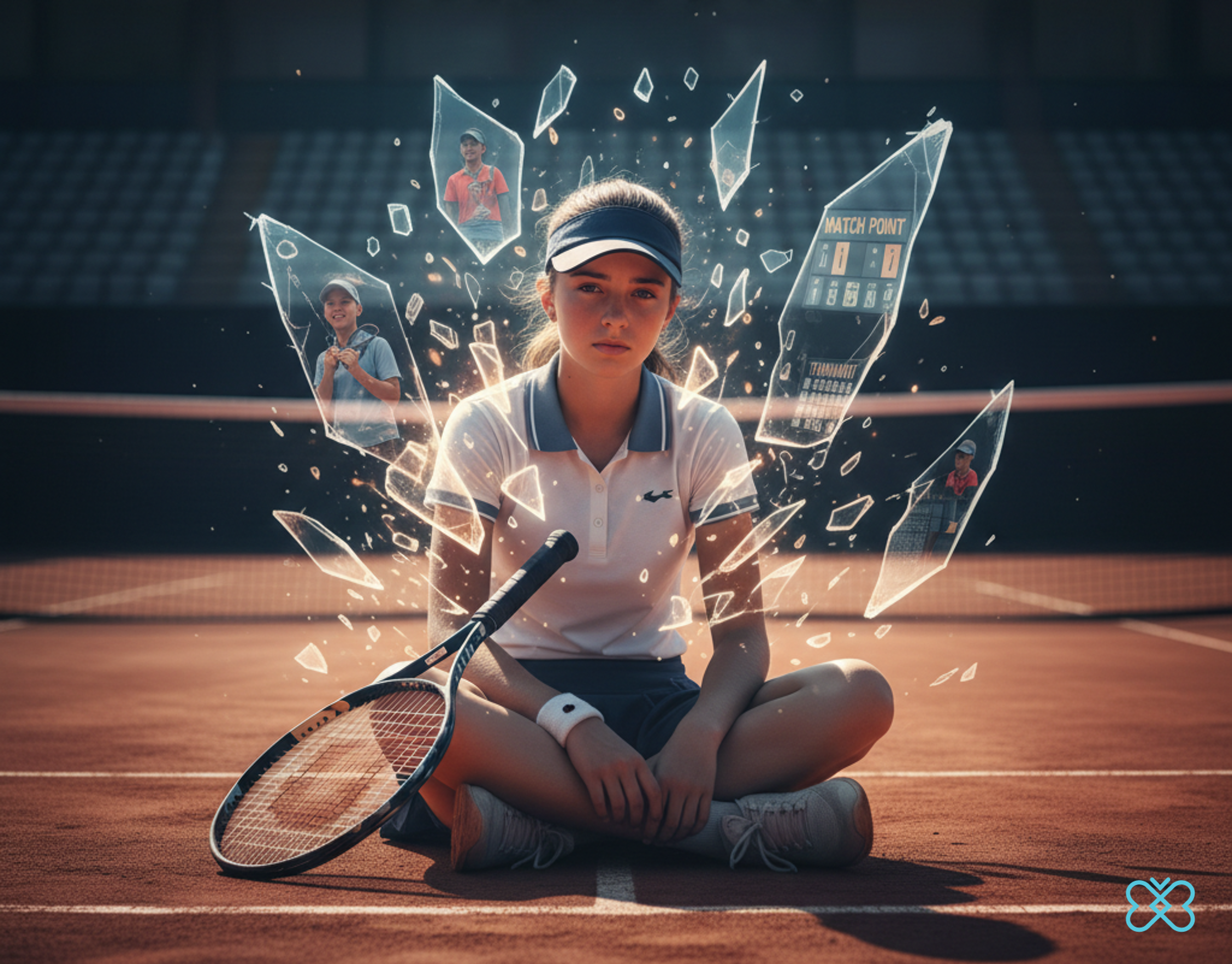
Walk through any major junior tennis tournament and the signs are everywhere. You see players staring silently at their phones between matches. You hear conversations dominated by rankings, points, and tournament schedules. You watch talented athletes unravel emotionally after a tough loss, only to be back on court hours later preparing for the next event. Parents worry. Coaches push. Players grind. From the outside, everything appears normal. After all, competitive tennis has always been demanding. But beneath the surface, something has changed. A growing number of young players are not simply becoming physically exhausted. They are becoming mentally and emotionally depleted. And unlike a sore shoulder, a strained hamstring, or an injured wrist, this type of injury is often invisible. The sport has become increasingly aware of physical burnout. Recovery science, nutrition, sleep optimization, and injury prevention have become standard parts of player development. Yet a far more significant challenge is quietly emerging across junior tennis:
The mental burnout crisis. And unless the industry begins treating mental recovery with the same seriousness as physical recovery, the problem is likely to grow.
Lifewrite BlogArthur Gutch2026-04-13T13:44:47-04:00