
The 33% Problem: Why Tennis Training Is Missing Its Most Important Third

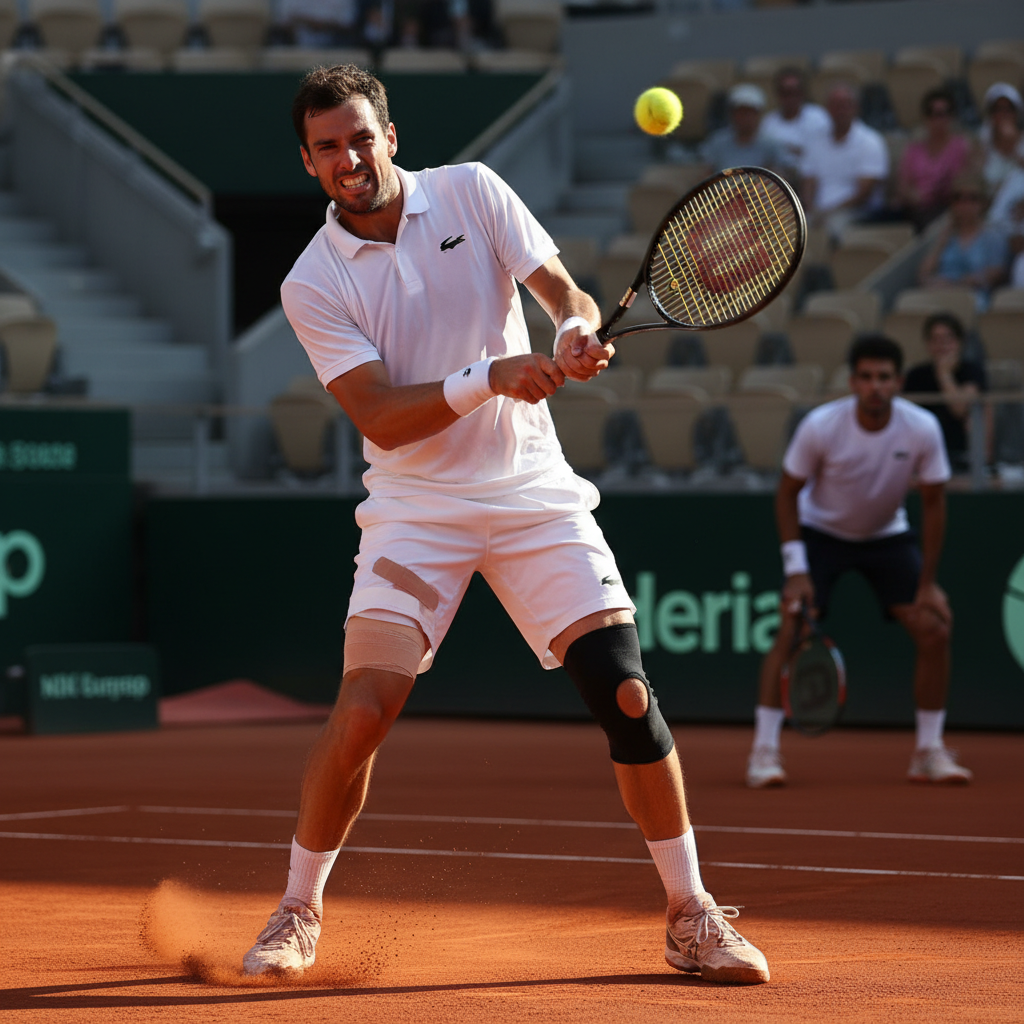
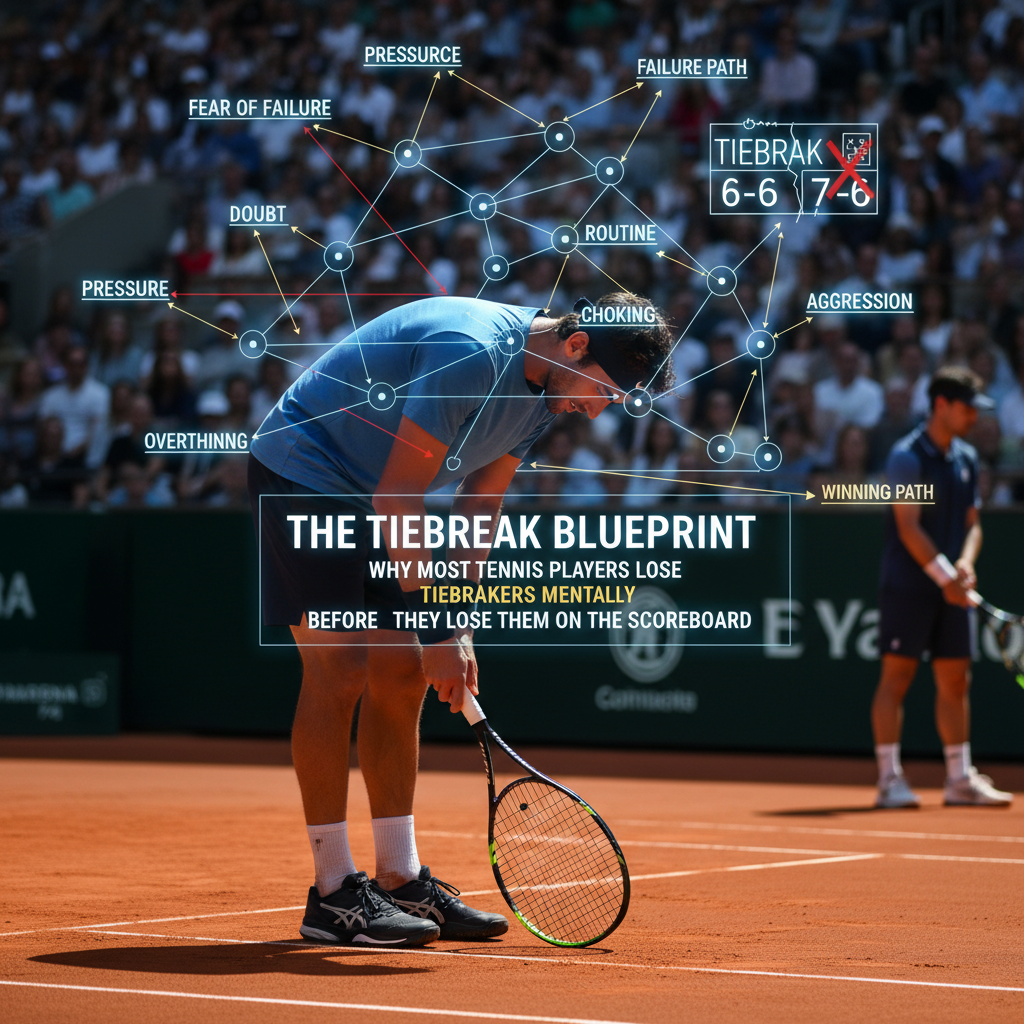
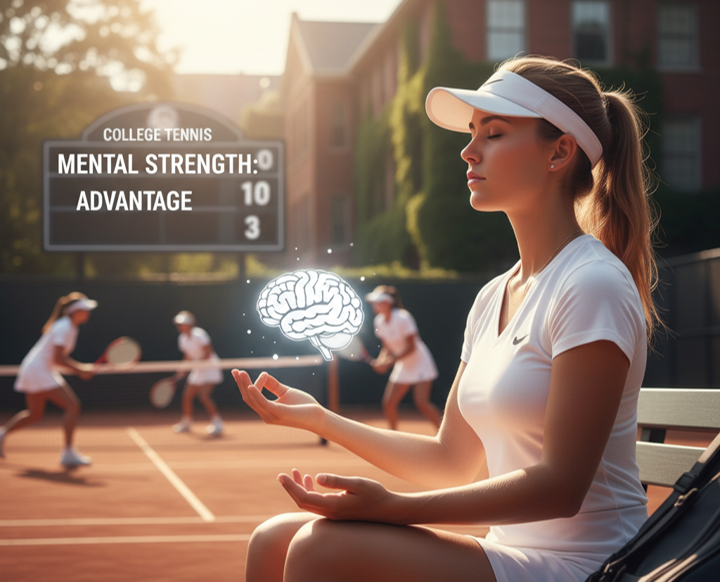
Tennis has always been a sport obsessed with precision. We analyze grips, refine footwork, track spin rates, and condition the body to endure long matches under heat and pressure. Coaches spend thousands of hours perfecting technique and physicality. Players chase marginal gains in speed, strength, and biomechanics. And yet, the most decisive moments in tennis rarely come down to any of those things. They happen in silence. Between points. After a missed forehand. At 30–40 on serve. Walking to the baseline after a double fault. This is where matches are won or lost. And this is where the sport is fundamentally undertrained. Tennis has a 33% problem. If you break performance into three core components, the imbalance becomes obvious: Technical Skill – strokes, mechanics, patterns, Physical Conditioning – endurance, strength, recovery and Mental Fitness – focus, emotional control, decision-making under pressure

By |2026-04-23T18:30:46-04:00April 23rd, 2026|Mental Wellbeing, Performance Enhancements, Sports & Athletic Performance, tennis|Comments Off on The 33% Problem: Why Tennis Training Is Missing Its Most Important Third

The Comparison Trap: How Measuring Yourself Against Other Players Can Either Elevate, or Destroy Your Game

You’re watching another player warm up on the next court. Their serve looks bigger. Their movement sharper. Their confidence more visible. Or maybe it happens mid-match. You glance across the net and think: “They’re better than me.” Or just as dangerous: “I should be beating this player.” In that moment, something shifts. Your focus drifts. Your energy changes. Your game tightens. And just like that, you’re no longer playing tennis, you’re playing a version of yourself shaped by comparison. Every tennis player does this. From juniors to club players… all the way up to the pros. The difference isn’t whether comparison happens. It’s how you respond to it. Because comparison is not inherently negative. Used correctly, it can accelerate growth, sharpen awareness, and elevate performance. Used poorly, it becomes one of the fastest ways to undermine confidence and consistency.

By |2026-04-16T11:47:54-04:00April 16th, 2026|Mental Wellbeing, Performance Enhancements, Sports & Athletic Performance, tennis|Comments Off on The Comparison Trap: How Measuring Yourself Against Other Players Can Either Elevate, or Destroy Your Game

The Confidence Paradox: Why the Serve in Tennis Breaks Down and How to Rebuild It from the Mind Out

The Confidence Paradox: Why the Serve in Tennis Breaks Down and How to Rebuild It from the Mind Out There is no shot in tennis more controlled… and more fragile… than the serve. • You choose the pace. • You choose the target. • You choose the timing. There is no opponent interfering. No reaction required. No chaos to blame. And yet, ironically, it is often the first shot to collapse under pressure.

By |2026-04-10T14:38:22-04:00April 10th, 2026|Mental Wellbeing, Performance Enhancements, Sports & Athletic Performance, tennis|Comments Off on The Confidence Paradox: Why the Serve in Tennis Breaks Down and How to Rebuild It from the Mind Out

The Focus Funnel: How to Use Visual Attention to Enter the Zone

There’s a moment in tennis that every player recognizes, but few can explain. The court feels slower. The ball looks bigger. Your reactions are effortless, your decisions instinctive. You’re not forcing anything. You’re not overthinking. You’re simply there. In the zone. It’s one of the most sought-after states in sports, and one of the most misunderstood. Most players assume that getting into the zone is about trying harder to focus. They tighten their attention, attempt to block out distractions, and push themselves into a narrow mental tunnel. Ironically, that’s often what pulls them out of the zone. Because focus in tennis isn’t static. It’s dynamic. It moves. It expands and contracts depending on the moment. The best players don’t just concentrate, they guide their attention with precision. This is what I call the Focus Funnel.

By |2026-04-03T10:35:29-04:00April 2nd, 2026|Mental Wellbeing, Performance Enhancements, Sports & Athletic Performance, tennis|Comments Off on The Focus Funnel: How to Use Visual Attention to Enter the Zone

Breaking the Slump: How to Reset Your Mind and Game

Every tennis player experiences it at some point. You step on the court expecting to play your normal game, but something feels off. The forehand that once felt automatic now lands long. The serve that used to give you free points suddenly feels fragile. Matches start slipping away, not just once, but several times in a row. Welcome to the tennis slump. Slumps are one of the most frustrating experiences in the sport. They can erode confidence, create doubt, and make even the most experienced players question their ability. But here’s the good news: a slump is rarely about your actual skill level. More often, it’s about mental momentum, focus, and perspective.

By |2026-03-25T11:06:03-04:00March 25th, 2026|Mental Wellbeing, Performance Enhancements, Sports & Athletic Performance, tennis|Comments Off on Breaking the Slump: How to Reset Your Mind and Game

Grunt with Purpose: The Mental and Physical Science Behind Tennis Grunting

In the world of tennis, few topics generate more debate—or decibels—than grunting. For some, it’s an annoying on-court habit. For others, it’s an essential weapon in their performance toolkit. Love it or loathe it, grunting is far more than just noise—it’s a window into an athlete’s breathing, rhythm, power, and focus.

By |2025-09-07T20:36:40-04:00September 7th, 2025|Mental Wellbeing, Performance Enhancements, Sports & Athletic Performance, tennis|Comments Off on Grunt with Purpose: The Mental and Physical Science Behind Tennis Grunting

Broken but Not Beaten: How to Stay Mentally Strong Through Tennis Injuries

For the last eighteen months I've been dealing with an injury that has me swirling mentally and physically. Discussions with medical experts and a search for a cure has become part of my daily DNA. In tennis, injury isn’t just a physical setback—it’s a mental test.  When your body can’t do what your mind craves, frustration, anxiety, and even identity loss can creep in. For passionate players, an injury feels like exile: from the court, from the community, and from the part of yourself that thrives in competition.

By |2025-08-29T11:25:07-04:00August 29th, 2025|Mental Wellbeing, Performance Enhancements, Sports & Athletic Performance, tennis|Comments Off on Broken but Not Beaten: How to Stay Mentally Strong Through Tennis Injuries

Watch the Ball: The Oldest Advice in Tennis Is Still the Most Powerful

"Watch the ball." If you've ever stepped foot on a tennis court—whether as a beginner or a professional—you've likely heard this phrase more times than you can count. It’s the tennis equivalent of “keep your eye on the prize,” a simple yet profound mantra passed down from coach to player for generations. And yet, for something that sounds so obvious, watching the ball is one of the most difficult—and most transformational—skills to master. In an era when tennis training includes AI analytics, slow-motion video review, and advanced biomechanics, this age-old instruction still reigns supreme. Why? Because it connects the most fundamental elements of human perception with the highest levels of performance.

By |2025-08-15T01:03:34-04:00August 15th, 2025|Mental Wellbeing, Performance Enhancements, Sports & Athletic Performance, tennis|Comments Off on Watch the Ball: The Oldest Advice in Tennis Is Still the Most Powerful

Silent Signals: The Unspoken Language of Winning Doubles Teams

In the world of competitive tennis, doubles is often described as a dance. The most successful teams seem to glide across the court in perfect harmony, anticipating each other’s moves with uncanny precision. Watch closely, and you’ll notice something fascinating: much of this coordination happens without a single word spoken. This is the silent language of doubles—the hand signals, subtle gestures, body positioning, and pre-point eye contact that transform two individual players into one seamless, strategic unit. If you’ve ever wondered how elite pairs seem to “just know” where their partner is going, when to poach, or how to change formation mid-point without chaos, the answer is often in their silent signals. And here’s the good news: you can learn to do it too.

By |2025-08-05T18:09:35-04:00August 5th, 2025|Mental Wellbeing, Performance Enhancements, Sports & Athletic Performance, tennis|Comments Off on Silent Signals: The Unspoken Language of Winning Doubles Teams

Zen and the Art of Losing Finals Gracefully (While Silently Screaming Inside)

There’s something mythic about reaching the finals of a tennis tournament—especially when it’s on a famous island, the kind of place where the courts smell like salt air, the vibes are equal parts prestige and pressure, and the players all seem just a little more dialed in. It was one of those three-day USTA marathons. My partner and I had fought our way through a gauntlet of competitive matches, managing to punch our ticket to the final. And then… we didn’t exactly punch back. Let’s just say it was not our Mona Lisa of match play. We were running low on fuel—physically, mentally, and perhaps spiritually. My body felt like it was running a step behind, and my partner, who’d just finished a singles marathon of his own, was in warrior mode but understandably depleted. Our performance was what you’d call “well-intentioned.” Not terrible, but not nearly what we knew we could do. So here’s the real kicker: how do you deal with that kind of loss? A high-stakes match where you know, deep down, that it wasn’t your best? Where circumstances—fatigue, nerves, recovery gaps—got the better of you? Where you're trying to radiate sportsmanship externally while managing an internal monologue that sounds like a wrestling match between Yoda and your inner critic? That, my friends, is where Zen and the Art of Losing Finals Gracefully begins.

By |2025-07-30T13:56:14-04:00July 30th, 2025|Mental Wellbeing, Performance Enhancements, Sports & Athletic Performance, tennis|Comments Off on Zen and the Art of Losing Finals Gracefully (While Silently Screaming Inside)
Go to Top