
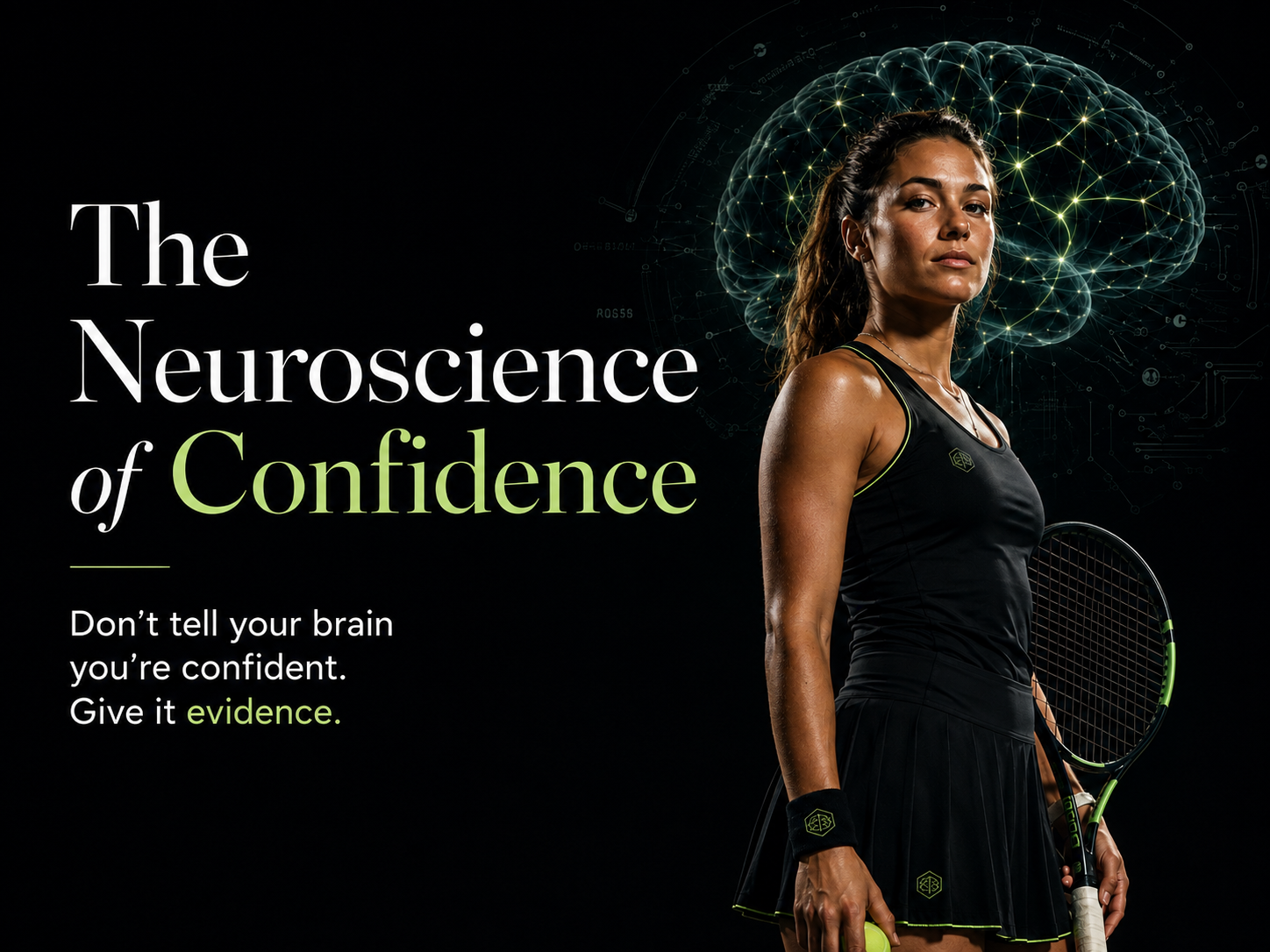
The Neuroscience of Confidence: Your Brain Learns What to Believe About You

Confidence is often treated as a feeling athletes either possess or lose, but the brain may be doing something more sophisticated. It is constantly using experience, memory, attention, and action to predict what you are capable of doing next. In Lab 5 of The Mental Fitness Lab™, we explore how confidence is built from credible evidence, why mastery experiences matter, how attention and memory can distort the confidence story, and why action can sometimes come before belief. The central idea is simple: confidence is not certainty about winning, it is a learned expectation that you can respond effectively when competition becomes difficult.
By |2026-08-27T17:50:06-04:00August 27th, 2026|Mental Wellbeing, Performance Enhancements, Sports & Athletic Performance, tennis|Comments Off on The Neuroscience of Confidence: Your Brain Learns What to Believe About You

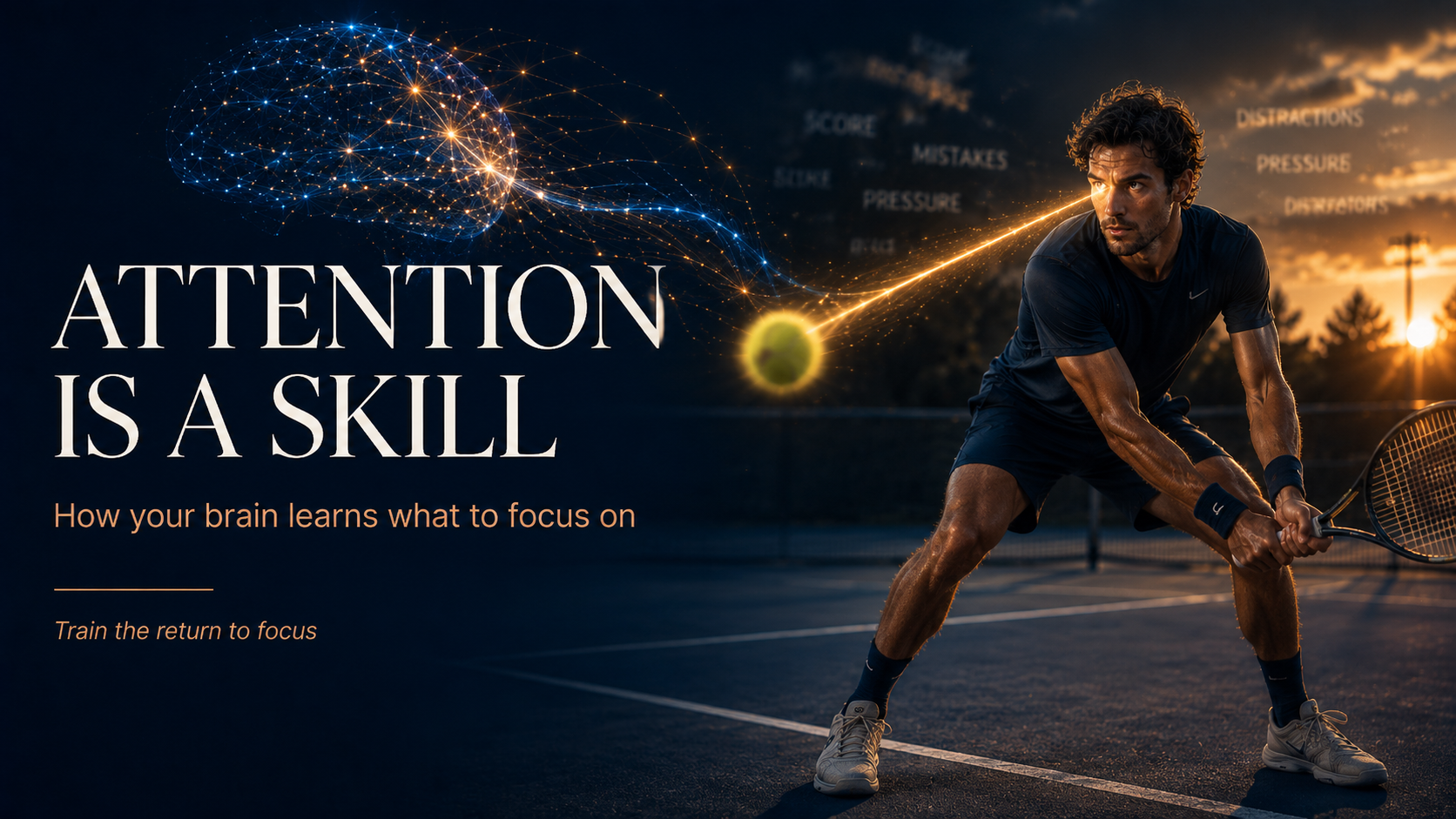
Attention Is a Skill, Not a Talent

Most athletes think focus is something they either have or lose, but attention works differently. During competition, the brain continually decides what deserves priority, and under pressure, that spotlight can shift from the ball and target toward score, consequences, mechanics, mistakes, and fear. In Lab 4 of The Mental Fitness Lab™, we explore the neuroscience of selective attention, why pressure changes what athletes notice, and why the most important attentional skill may not be maintaining perfect concentration but learning how to return when the mind wanders. Through simple tools such as **NOTICE → RELEASE → RETURN** and **BALL → BREATH → TARGET**, players can begin training attention as intentionally as they train strokes, movement, and conditioning.

By |2026-08-10T18:04:19-04:00August 10th, 2026|Mental Wellbeing, Performance Enhancements, Sports & Athletic Performance, tennis|Comments Off on Attention Is a Skill, Not a Talent
Go to Top