The Generation Effect: Why Writing Doesn’t Just Capture Your Thoughts – It Changes Your Brain
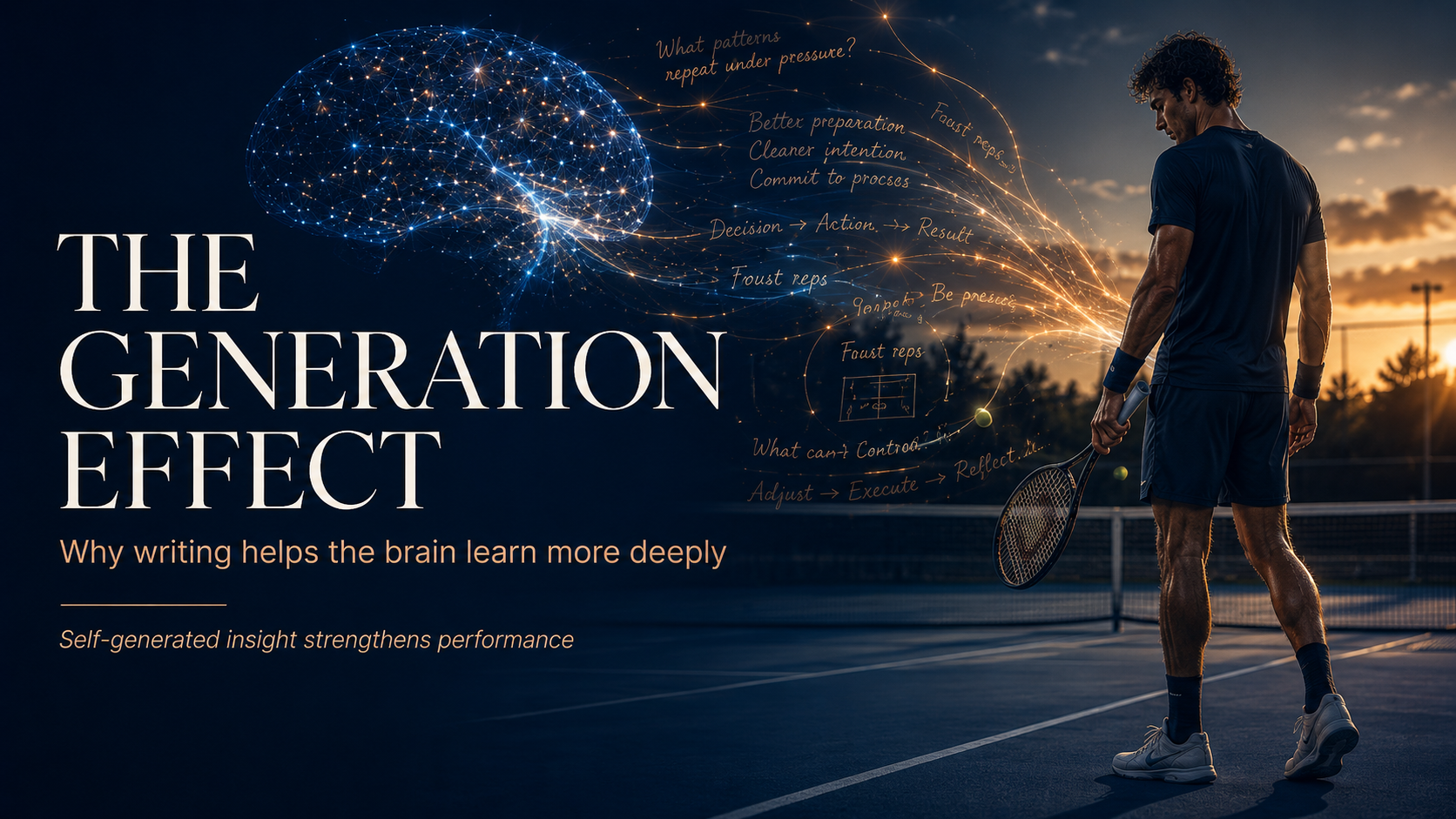
The Generation Effect explains why athletes learn more deeply from insights they actively create than from information they simply read, hear, or watch. While coaching, books, videos, and podcasts can provide valuable knowledge, lasting change occurs when players connect that information to their own experiences, identify patterns, and generate their own responses. Structured writing supports this process by slowing thought down, clarifying meaning, and turning vague reactions into practical lessons for future performance. In Lab 3 of The Mental Fitness Lab™, we explore why Writing Trails™ are more than journaling, they are a form of active learning and intentional mental conditioning designed to strengthen confidence, focus, resilience, self-awareness, and performance under pressure.